
Lead capture is useful when it helps a person get the right response with fewer repeated questions. The flow should collect only information necessary to respond, explain the next step, and avoid turning a support inquiry into unsolicited marketing.
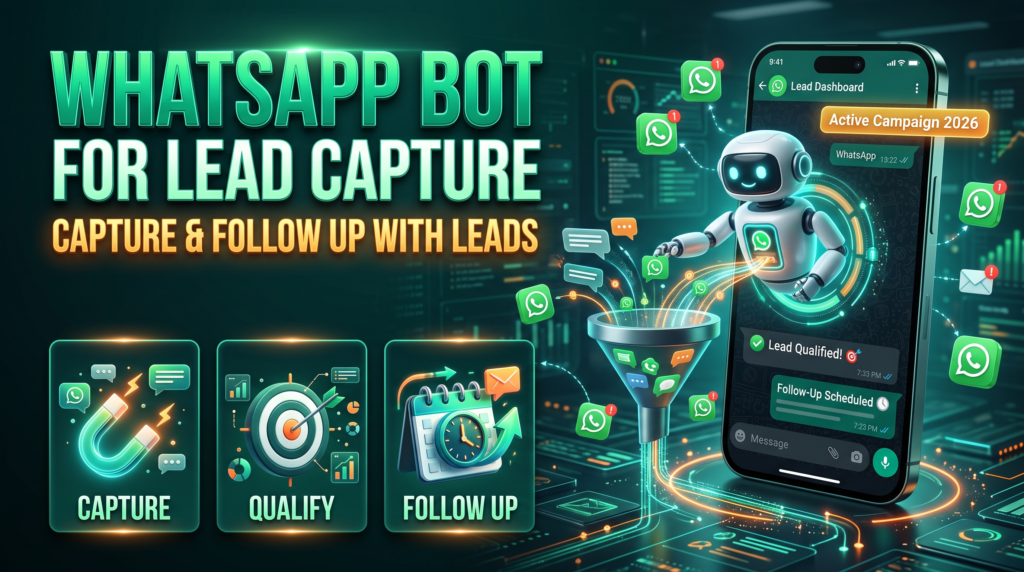
Keep the form short and purposeful
Ask for the service or product of interest, the one or two details needed to assess the request, and a preferred contact time if relevant. Avoid sensitive information unless there is a documented need and appropriate safeguards.
Qualify without making promises
Use clear rules such as service area, availability, budget range, or request type. Explain that qualification is a routing aid, not an automatic acceptance or quote. Make it possible to correct an answer or talk to a person.
Make the next step clear and proportionate
Tell people why you are asking for contact details, how the team will use them, and what happens after submitting the enquiry. Ask for only what is needed to respond. Separate a request for information from permission to receive recurring marketing where the applicable rules require it. Verify that each lead reaches the correct inbox or CRM, test duplicate submissions, and provide a simple way for staff to correct or delete a record when appropriate.
Check the whole lead path
Send a test lead through the form or conversation and confirm that it reaches the correct team with accurate time, source, and requested service. Test duplicates, invalid contact details, deleted requests, and staff absence. Explain the next response step so the customer is not left wondering whether the form worked. Do not collect more personal information simply because a field is available; every field should have a clear business purpose.
Continue with WhatsApp Follow-Up Timing: A Practical Guide to plan a related lead or follow-up step without assuming every contact is ready to buy.
Before automating this step
- Define what counts as a qualified lead.
- Collect the minimum data needed for that definition.
- Tell the customer who will receive the enquiry and what happens next.
- Set an owner, response deadline, and stop condition for follow-ups.
A practical scenario
A cleaning service could ask for postcode, property type, and preferred day. A staff member confirms scope and price before the system labels the booking as accepted.
Limits and safeguards
Do not imply that a person consented to future marketing merely because they asked for a quote. Keep intake, service messages, and promotional permission distinct.
Audit the lead form for necessity and permission
Use this mini-check on an authorized test setup before relying on this workflow. It is a repeatable test plan, not a claim that Erfan MD has already passed these cases.
- For each field, write why it is needed and who can access it; remove fields that do not affect the next step.
- Tell the person how the information will be used and distinguish answering their enquiry from permission for later marketing.
- Test the route after submission, including confirmation, staff assignment, retention, and opt-out from future follow-ups.
Common questions
How many questions should a lead flow ask?
Only enough to route the enquiry and prepare the next useful step.
When should a lead receive a follow-up?
Follow the stated expectation and applicable consent rules; stop when the person declines or opts out.
Official documentation to check
Track customer permission, useful outcomes, negative responses, and opt-outs alongside conversions. Fast or frequent messages are not evidence of a healthy customer experience.
- WhatsApp Bot for Service Businesses: FAQs, Leads and Follow-Ups — Design service-business messaging for first-contact questions, lead qualification, appointment requests, and respectful follow-up.
- WhatsApp Bot for Small Business: Plan Support, Leads and Orders — Plan a small-business WhatsApp workflow for support, lead qualification, or order updates, with clear limits and human handoff.