
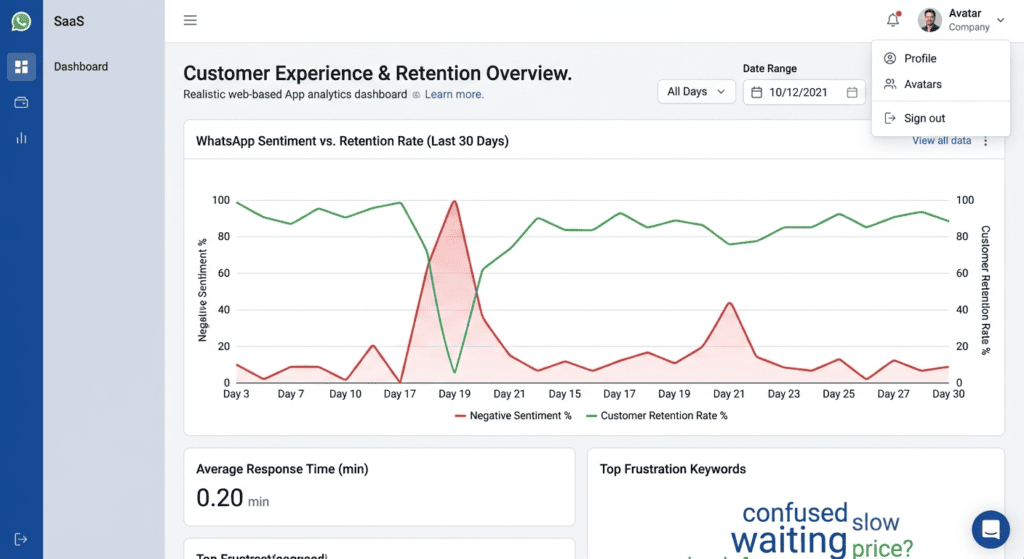
Short replies, repeated questions, or an explicit complaint can signal frustration, but messages lack tone and context. Treat them as a cue to clarify and help—not proof of a customer’s mood.
Look for the issue behind the wording
A customer may be upset because the order is late, the earlier reply was unclear, or they had to repeat information. Read the conversation history and identify the unresolved task before sending a template apology.
Acknowledge, act, update
A useful response names the issue, states what you will check, and tells the customer when they will hear back. If you do not know the answer, say so and transfer the conversation to someone who can investigate. Keep the record factual and avoid blaming the customer.
Respond to the stated problem, not an inferred emotion
Repeated questions, terse replies, or messages such as “I already explained this” can indicate friction, but tone can be misread in text. Acknowledge the specific issue, summarize what you understood, and offer a concrete next step. Avoid arguing about how the person feels. If the matter concerns payment, safety, privacy, or a serious complaint, route it to a qualified person and preserve only the information needed to resolve it.
A practical de-escalation sequence
First acknowledge the issue without blaming the customer. Next, restate the specific problem in one sentence. Then give a concrete action and time for the next update, or transfer the matter to someone empowered to resolve it. Avoid defensive scripts and do not promise a refund, delivery time, or exception until it has been authorized. After resolution, review what caused the repeated contact and improve the process if the same issue recurs.
For the next support step, read Do Slow WhatsApp Replies Cost Customers? How to Measure and compare its handoff and resolution checks with this workflow.
Customer-care checklist
- Summarize the customer’s stated problem in one sentence.
- Acknowledge the inconvenience without making an unverified admission.
- Give the next action and a realistic update time.
- Confirm the result and record any recurring cause.
Worked example
“I understand the parcel has not arrived by the date we gave you. I’ll check the courier status and update you by [time]. If I cannot confirm it, I’ll explain the next option.”
Where this approach can fail
Do not label customers as irrational or angry based on an emoji or short reply. Escalate threats, safety concerns, or sensitive complaints through the appropriate support process.
Resolve the stated problem before interpreting tone
Use this mini-check on an authorized test setup before relying on this workflow. It is a repeatable test plan, not a claim that Erfan MD has already passed these cases.
- Identify the specific issue, acknowledge it without arguing about the customer’s emotions, and ask one clarifying question if necessary.
- Escalate repeated failure, safety concerns, financial disputes, or a request for a person instead of relying on sentiment detection alone.
- Record the resolution and follow-up promise so a second agent does not make the customer explain everything again.
Frequently asked questions
Should a bot handle an angry customer?
It can acknowledge a message and collect context, but it should hand off when the issue is complex or the customer asks for a person.
Can sentiment detection be trusted by itself?
No. Treat it as a prompt for review, not a final judgment about the person.
Official references and further reading
Keep a clear path to a person for unresolved, sensitive, urgent, or repeated problems. An automated reply is not the same as a resolved support case.
Read next
- WhatsApp Customer Support Bot: FAQs and Human Handoffs — Build a WhatsApp support bot with useful FAQs, escalation triggers, and a human handoff that actually works.
- When WhatsApp Automation Fails: Risks and Fixes — Avoid common WhatsApp automation failures by testing edge cases, monitoring answers, protecting customer data, and keeping a human fallback.